Celebrity News
Bruce Willis’ Wife Emma Reveals Actor Hasn’t ‘Connected the Dots’ That He Has Frontotemporal Dementia


Bruce Willis is battling severe memory loss from a devastating brain disease that is slowly stealing his life — yet he remains unaware of his condition and believes everything is “normal,” the National Examiner can reveal.

The 70-year-old Die Hard legend’s devoted wife, Emma Heming Willis, says her husband doesn’t recognize his worsening condition as he battles frontotemporal dementia. And while it’s heartbreaking he doesn’t realize these may be his last days, it’s also a blessing.
“He never connected the dots that he has this disease, and I’m really happy about that,” Emma, 47, said on the Conversations with Cam podcast. “I’m really happy he doesn’t know about it.”

Emma explains Bruce’s lack of awareness is due to anosognosia, a condition in which the brain cannot recognize its own illness. The Cleveland Clinic notes anosognosia is extremely common in Alzheimer’s disease and other neurological disorders. While not dangerous on its own, the condition can cause patients to resist treatment.
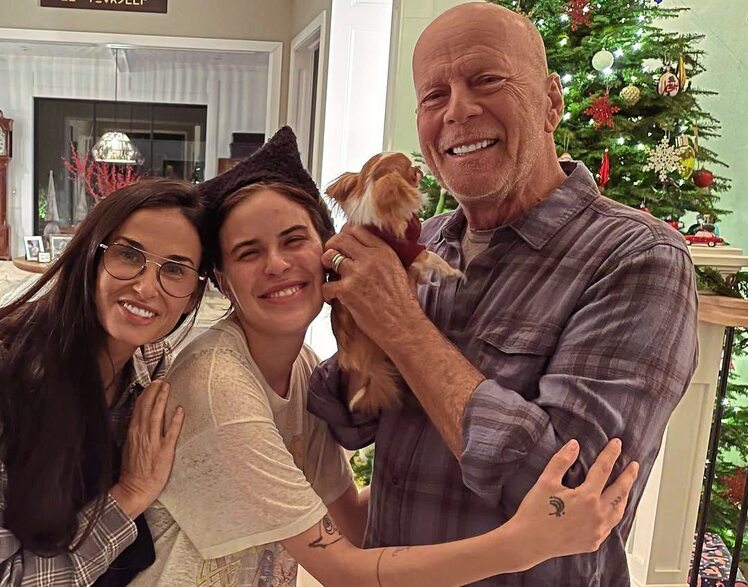
“People think this might be denial, like they don’t want to go to the doctor because they’re saying, ‘I’m fine, I’m fine,’” Emma says. “But it’s actually the anosognosia that comes into play. It’s not denial. Their brain is changing. This is part of the disease.”
More than two years after his frontotemporal dementia diagnosis, Bruce is still “very much present in his body,” Emma says. However, recently she made the difficult decision to move him out of their home into a residence where he receives around the clock care from a professional team.
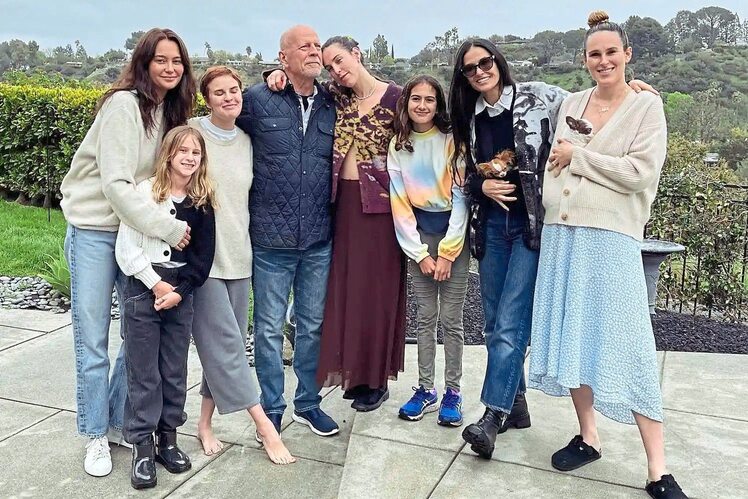
Bruce and Emma share two daughters, Mabel, 13, and Evelyn, 11. The action star also has three daughters — Rumer, 37, Tallulah, 34, and Scout, 31 — with ex-wife Demi Moore, who has been a tremendous support through this ordeal, says Emma.
And even though Bruce is slowly slipping away, he can still be present. “He has a way of connecting with me and our children — not in the same way as before, but it’s still very beautiful,” Emma says. “It’s still very meaningful. It’s just different. You learn how to adapt.”